Introduction
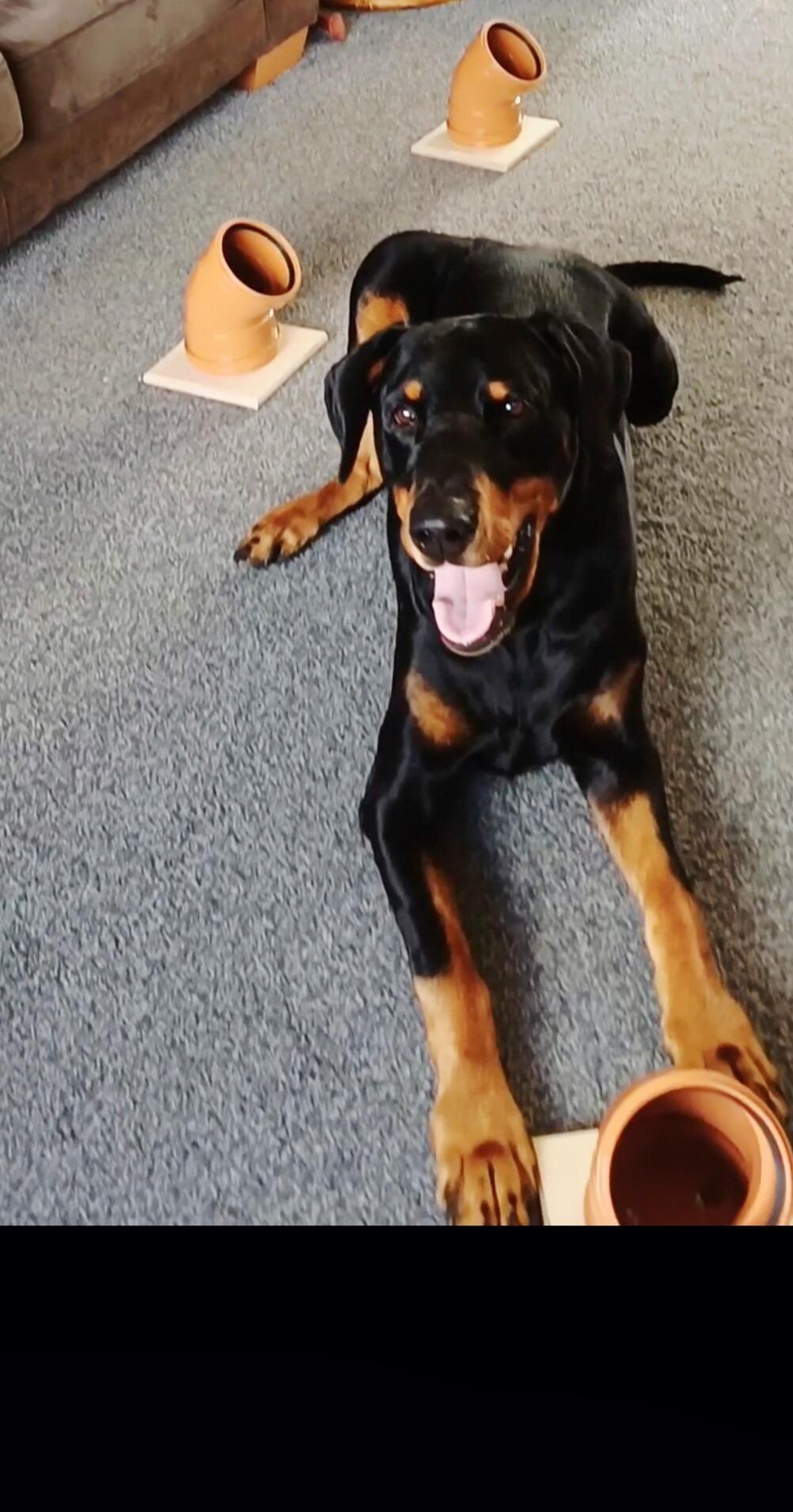
Scentwork pipes are a brilliant way to create clear, confidence-building searches at home, in the garden, or as part of a training class.
They give your dog a simple search picture, help you build a consistent routine, and make it easier to observe how your dog responds to odour. Whether you are using one pipe for a very simple search or building a longer line-up with several pipes, scentwork pipes are wonderfully versatile.
Although this guide focuses on scentwork pipes, the same principles can be used with similar robust items, such as flowerpots, bait boxes or other suitable containers. The key is to keep the setup safe, consistent and as visually similar as possible, so your dog is learning to search for odour rather than spot the odd-one-out.
In this guide, we’ll cover the basics of searching with scentwork pipes, from introducing one pipe, adding a blank pipe, building a simple line-up, and spotting those happy little “I’ve found it!” moments when your dog catches the odour. We’ll also look at reward placement, handler neutrality, pipe covers and a few common training hiccups I’ve helped clients work through.
Scentwork pipes are useful for the handler too. They help us practise guiding the search without overhandling. Our dogs bring the nose; we manage the setup, read the body language, and stay neutral enough to let them do the clever detective work.
What you’ll need
To get started with scentwork pipes, you’ll need:
- your chosen odour
- high-value rewards
- one or more scentwork pipes - of course, you don't have to use pipes, flowerpots, bait boxes will all work well, as long as they are all similar.
- optional pipe covers
Step 1: Introduce the Scentwork Pipe
The first step is to teach your dog that investigating the pipe is rewarding.
Place one scentwork pipe containing your target odour on the ground in a quiet, low-distraction space. Introduce the pipe with your usual search cue, such as “find it”, then allow your dog to explore at their own pace.
If they need a little help to get started, you can use a happy voice and a little guidance to encourage them towards the pipe, without crowding them. Keep it easy and let their nose do the work.
As soon as your dog sniffs the pipe opening, mark the moment with a clear word such as “Yes!” or use a clicker. Then drop a high-value treat close to the pipe.
Rinse and repeat, keeping the session short and easy. Before moving to the next step, we are looking for your dog to sniff the pipe with confidence and enthusiasm.

🐶 Trainer tip:
At this stage, we are not looking for a polished final response - also called an "indication". We are simply helping the dog understand that the pipe is worth investigating and that odour is where the good stuff happens.
Step 2: Add a blank Scentwork Pipe
The first step is to teach your dog that investigating the pipe is rewarding.
Place one scentwork pipe on the ground in a quiet, low-distraction space. Introduce the pipe with your usual search cue, such as “find it”, then allow your dog to explore at their own pace.
As soon as your dog sniffs the pipe opening, mark the moment with a clear word such as “Yes!” or use a clicker. Then drop a high-value treat close to the scentwork pipe.
Repeat this several times, keeping the session short and easy.
At this stage, we are not looking for a polished final response. We are simply helping the dog understand that the pipe is worth investigating and that odour is where the good stuff happens.

Once your dog is happily investigating one pipe and associating the hot scentwork pipe and odour with a sniff-tastic reward, you can introduce the first simple search decision.
Set out two scentwork pipes
One pipe contains your target odour.
One pipe is blank and clean.
Let your dog investigate both. Try to stay still and neutral. The more we help, the less the dog learns to trust their nose.
When your dog sniffs the “hot” scentwork pipe, mark and reward close to the correct pipe. If they investigate the blank pipe, simply wait and let them work it out. If they start to get frustrated, reset the game: move them away from the pipes, give them a moment, then return to the exercise with a clearer, calmer start.

🐶 Trainer tip: Notice the head position
Once your dog is beginning to recognise the odour, you can start to shape the early foundations of an “indication”. An indication is simply a signal that says, “I’ve found it.”
Keep it simple. When your dog finds the correct pipe and their head is pointing down towards the pipe opening, wait for a tiny moment of focus, then mark and reward close to the odour.
You are not looking for anything fancy at this stage. Just nose down, interest in the correct pipe, and a little moment of commitment to source. Over time, this can help develop into a clearer final response.
Step 3: Build a simple line-up: Add a blank Scentwork Pipe
Once your dog understands the two-pipe game, you can start building a simple line-up.
Add more blank scentwork pipes or containers one at a time. Start with three pipes, then build gradually.
Keep the pipes evenly spaced and visually similar. This helps your dog focus on the odour rather than obvious visual clues.
Before each search, bring your dog to a clear start point, let them settle for a moment, then use your usual search cue, such as “find it”. This helps your dog understand when the search begins and gives you a more consistent training picture.
Let your dog work along the line at their own pace. Mark and reward when they locate the pipe containing odour.


🐶 Trainer tip:
The “hot” scentwork pipe simply means the pipe that contains your target odour. It’s a colloquial term often used by trainers, and just means the pipe with odour in it. Wherever possible, keep one pipe as your dedicated hot pipe and keep your blank pipes clean and separate. This helps prevent odour transferring onto the clean equipment and keeps the search picture clearer for your dog. Bit of kit housekeeping, but a very good habit to get into!
As your dog searches
Look for changes in behaviour. These might include:
- a head turn
- a pause
- a nose dip
- a change in breathing
- a return to a pipe
- a moment of stillness
- a subtle change in body tension
What is your canine sleuth telling you?
In scentwork, these little shifts are called a change of behaviour or "C.O.B" for short. Essentially, your dog has picked up a "clue" and their body movements have changed in response.
It is not always obvious. This is not usually a full “squirrel across the garden” moment. Sometimes it is far more subtle: a tiny head movement, a slight slowing down, a sharper sniff, a change in tail carriage, or a moment where your dog seems to say, “Hang on, there’s something here.”
These changes can tell us that your dog has caught odour, moved into the odour area, lost the scent picture for a moment, or is working back towards source. A dog might slow down as they gather more information, change direction as they follow the scent, or return to a pipe because something about it is pulling them back.
This is why simple scentwork pipe searches are so useful. Because the setup is clean and repeatable, it becomes easier to spot the difference between your dog generally investigating and your dog responding to target odour.
The goal is not just for your dog to find the “hot” pipe. The goal is for you to learn how your dog looks when they are working odour.
Scentwork Pipe FAQs
Why is my dog pawing, bashing or grabbing the pipe?
Your dog may be over-excited, frustrated, or trying to access the source directly. Pause the session and reset. You can make the setup easier, use calmer reward delivery, or reward slightly earlier while your dog is still using their nose rather than their paws.
A pipe cover may also help reduce rummaging or diving into the pipe. You can purchase these here from the sniffer shop/products/cover-for-scentwork-pipes
Why does my dog keep looking at me instead of searching?
Dogs are very good at reading us, so first ask what are they looking for? Is it support, or have they clocked the treat pouch and decided that you are currently the most interesting scentwork station?
If this happens, reduce the criteria. Go back to one pipe and help your dog practise staying focused in the search, even if you shift position. For example, you might move slightly beyond the hot pipe, change your angle, or step to the side, while keeping your hands quiet.
This helps your dog learn that your movement is just background noise, not a clue. The pipe is the puzzle. Their nose has the answer.
What should I do if my dog is guessing?
Make the search easier.
Go back to one hot pipe or a simple two-pipe setup, reward close to source, and build confidence again. Guessing often means the dog needs a clearer picture, not a harder search.
It is also worth doing a quick pre-search check-in. Is your dog in the right mindset to work? Are they focused, comfortable and ready to engage, or are they a little too excited, distracted or unsure?
A simple warm-up game before you start can really help. This might be a quick “find it” game with food, a short play session, or an easy food search your dog already understands. The aim is to help your dog settle into the game before asking for more thoughtful searching.
If your dog is still actively working, give them time to think; if they are getting frustrated, overwhelmed or switching off, simplify the setup and help them succeed.
Why does my dog keep going back to the blank pipe?
Take a break then before restarting, check for accidental contamination. Blank pipes should stay clean and separate from your hot pipe and odour equipment.
If in doubt, refresh your set up, and start again.
Why can my dog find the pipe once, then struggle when I move it?
That is pefectly normal. Dogs can learn patterns very quickly.
Move the hot pipe between repetitions, but keep the setup easy enough that your dog is still succeeding. Change only one thing at a time: not more pipes, new location, different spacing and your neighbour mowing the lawn all in one go!
What should I do if my dog struggles?
Simplify the picture.
Most scentwork problems are not disasters. They are information. Before changing everything at once, do a few quick checks and balances. How long have you been training? Is your dog tired, thirsty, too excited, distracted, or starting to switch off?
Sometimes the best training decision is to take a short break, offer water, reset the environment, and come back to an easier version of the search.
Make the setup easier, reward clearly, and give your dog another chance to succeed.
Scentwork pipes are brilliant for this because the setup is simple, repeatable and easy to adjust.
Even simple setups can throw up the odd training curveball. Here are a few common scenarios I’ve seen when teaching scentwork, along with some practical tips that can help.
Already Using Scentwork Pipes?
- Our new NoseyPipes® with a practical and cute cap
- Robust but lightweight
- And available in FOUR gorgeous colours, now available at our introductory price of £15.50 until 14th August.
Final thoughts about using Scentwork Pipes..
Scentwork pipes are simple, versatile and wonderfully useful for building confidence, odour focus and developing handler observation skills at any stage of your scent detection journey with your dog
Enjoy this article? You might like this article about Using Pot Runs in Scentwork
Want to learn more about The Sniffer Shop Scentwork Pipes? Click the link below...

Article written by Kate Hart,awarding winning and accredited dog trainer with the IMDT and qualified scentwork instructor and founder of the Sniffer Shop.
She juggles a busy life teaching scentwork, running the shop, and keeping six enthusiastic Labradors mostly out of mischief! Her passion is making scentwork simple, fun, and accessible for all dogs. 🐶